Guide
My garage door came off track after a bump in Scottsdale, AZ: what now?
You backed in a little too far, or the car rolled before it was fully in park, and the bottom panel took the hit. Now one side of the door hangs lower than the other, the rollers are out of the track, and the door will not move. Do not press the button again. Here is what actually happened, and what to do about it.
Good to know
What the bump actually did
A garage door rides on rollers that sit inside a vertical track on each side. The opener pulls the top of the door, the springs do the heavy lifting, and the tracks keep the whole stack moving in one plane. When a car nudges the bottom panel, the panel absorbs the hit first. If the hit is hard enough, the bottom roller pops out of the track, and once one roller is out, the panel cocks and pulls its neighbors with it.
That is the moment the door becomes a lever. The cables that carry the spring tension go slack on one side, the spring keeps its energy wound up, and the door hangs in a position the tracks were never meant to hold. Nothing has fallen yet. The danger is what the spring will do when the door is forced to move anyway.
Openers
Do not run the opener again
The instinct is to press the button and see if it sorts itself out. It will not. Every cycle the opener forces on a derailed door bends panels a little further, because the door is jammed against the track and the motor does not care. The first bump dents a panel. The second and third bend the door, and a bent door is the line where a panel repair becomes a new door.
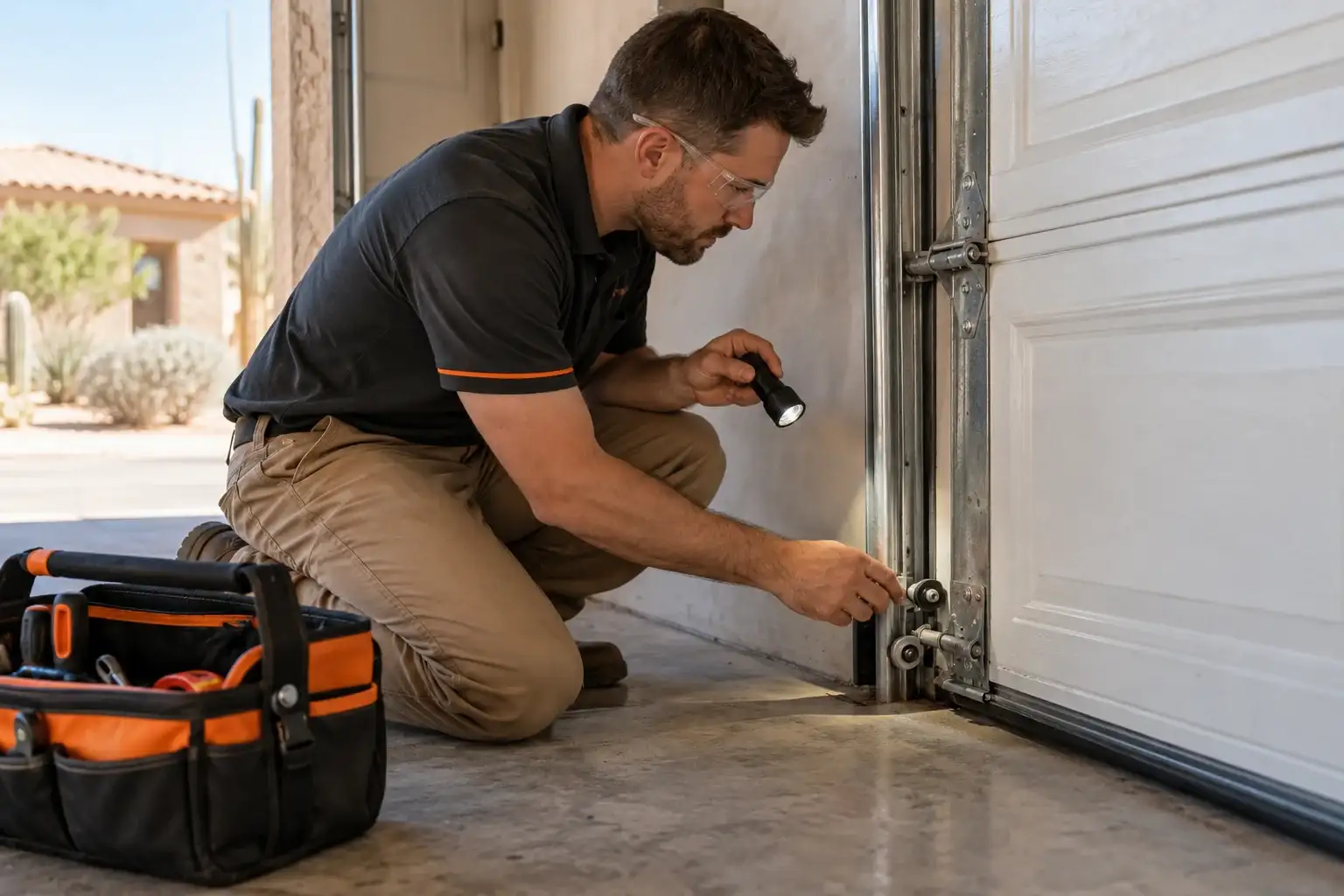
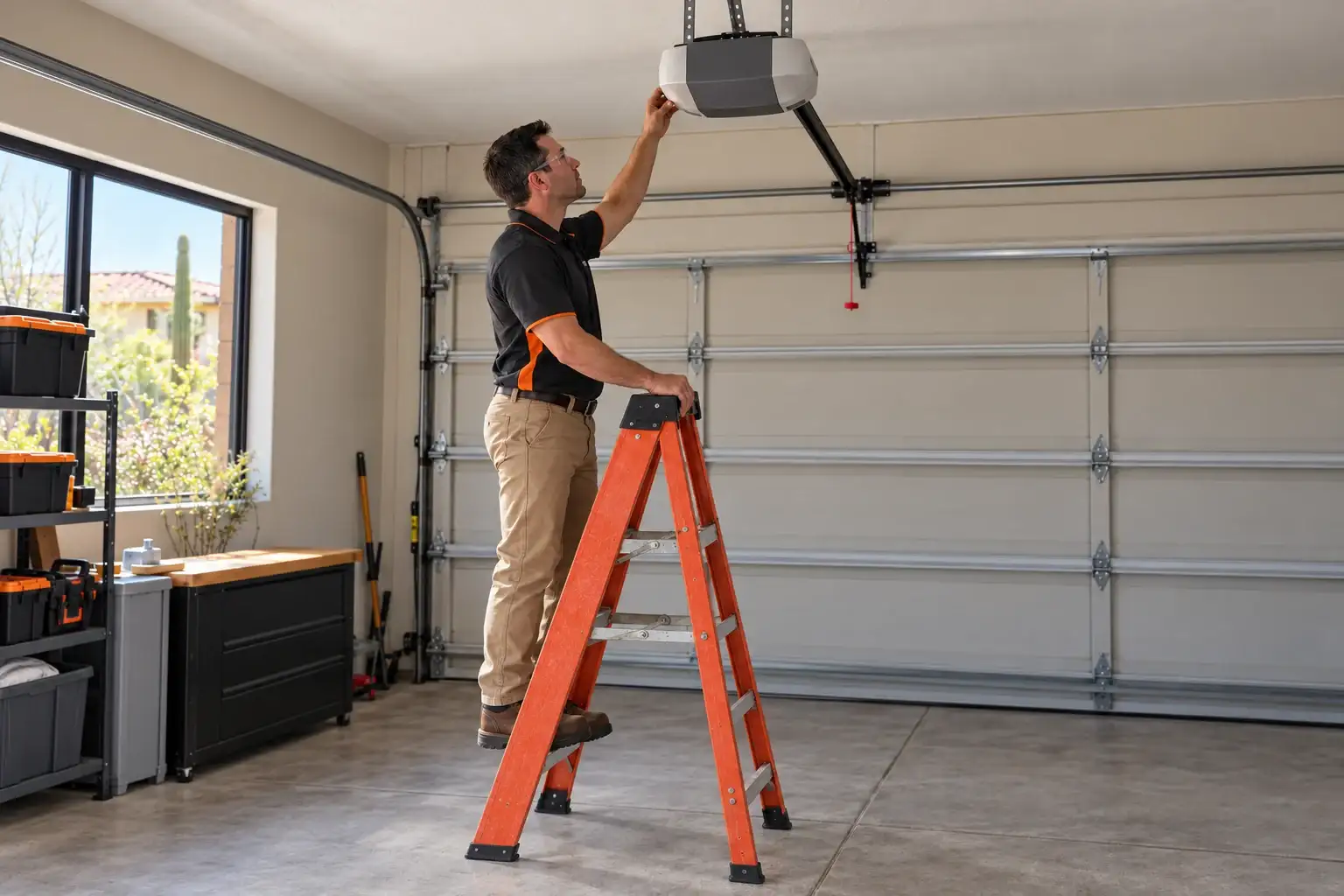
The spring is the other reason to stop. A torsion spring stores its energy on the shaft, and a derailed door can unload that energy unevenly. The door weighs hundreds of pounds, and it is now sitting wrong. Leave it, disconnect the opener if you know how, and call before anyone touches it. This is the one garage door situation where the two minute check is someone else's job.
Good to know
What to check before anything else
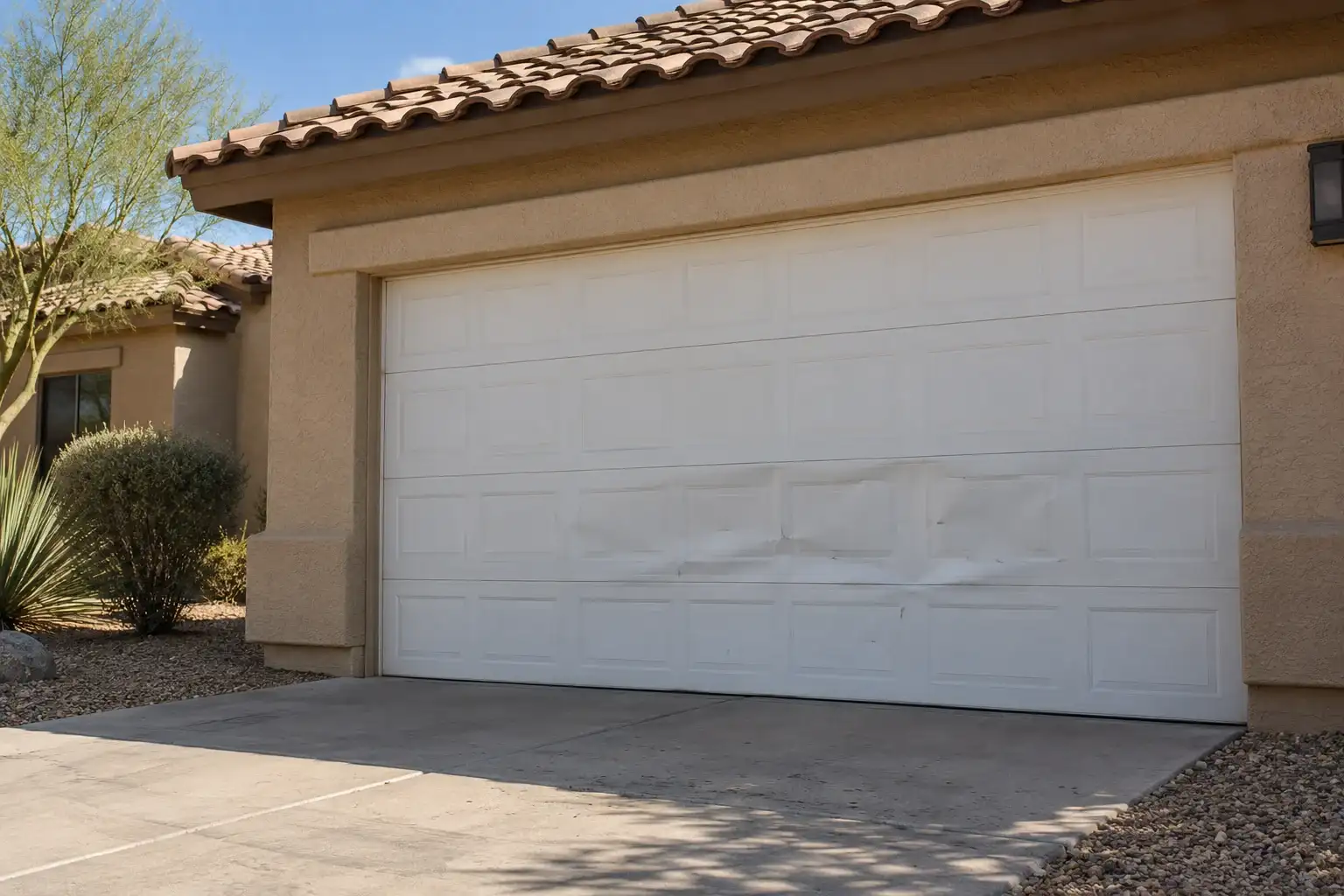
Two things, and they take a minute each. First, look at the cables on both sides. If one cable is slack or off its drum, the spring is no longer working as a pair, and the door is not just derailed, it is unbalanced. Second, look at the bottom panel. If it is dented but the door is otherwise square, you have a panel job. If the panel is creased or the door itself is racked, the damage has moved into the frame of the door, and that changes the whole conversation.
Leave the photo-eye alone for now. The safety reversal is the two minute test everyone should run on a healthy door, and it matters, but it is not the issue here. The issue is a door sitting outside its tracks with a loaded spring above it.
Good to know
What the fix actually looks like
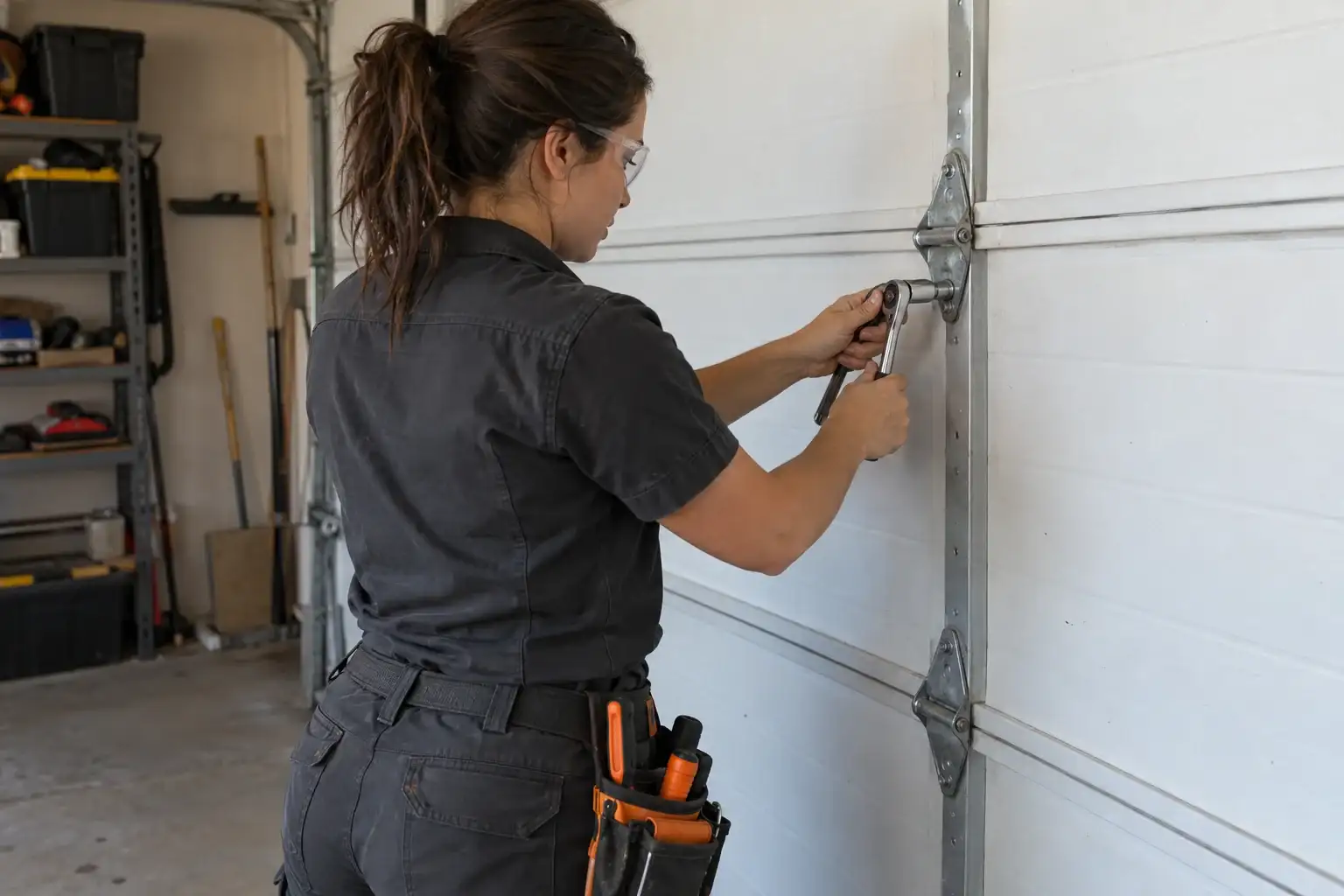
Someone has to take the tension off the spring before anything else moves. After that, the door gets walked back into the track one panel at a time, the rollers get reseated, and the cables get reset on the drums. The panel that took the hit gets inspected for creases, the tracks get checked for the bend the rollers made on the way out, and the door gets balanced again.
Often the door survives and the job is a reset plus a panel straighten. Sometimes the panel is creased and it gets swapped, which is usually a single section, not a whole door. And sometimes the track itself is bent, in which case the track section gets replaced along with the panel. The honest answer depends on what the bump did, and it is visible in the first few minutes. The whole thing is less dramatic than it sounds and more common than people expect: a derailed door is a reset job most days, measured in hours, not weeks.
Good to know
Why one bump did all this
A healthy door takes a small bump and shrugs. The doors that derail are usually the ones that were already drifting. Expansive clay in parts of the Valley swells and shrinks with the seasons, and a door that has been slowly falling out of alignment needs only a small shove to leave the track entirely. The bump is the trigger. The drift was the cause.
Heat is the accomplice. Arizona heat dries out rollers and hinges, a squeal becomes a failure, and dry rollers bind at exactly the moment the door gets pushed sideways. A door with fresh rollers and true tracks takes the same bump and stays put. That is not a reason to blame yourself for backing in. It is a reason to look at the whole door, not just the panel.
There is also the question nobody asks: where was the door balanced before the bump? A door that did not hold at half height was already asking its springs for more than they had, and the bump just found the slack. The reset is the moment to check the balance, because a door that gets fixed and goes back to the same worn springs will derail again.
Panels and doors
When the bump means a new panel instead
One dented panel is usually repairable. A bent door or a cracked section is not. That rule holds here. If the bottom panel is dented but the door still sits square, a panel swap or a straighten is the likely fix, and the door goes back to work. If the panel is creased across its width, or the door no longer sits square in the opening, the repair math changes, and a new door becomes the cheaper path. See panel repair vs a new door for how that decision actually goes.
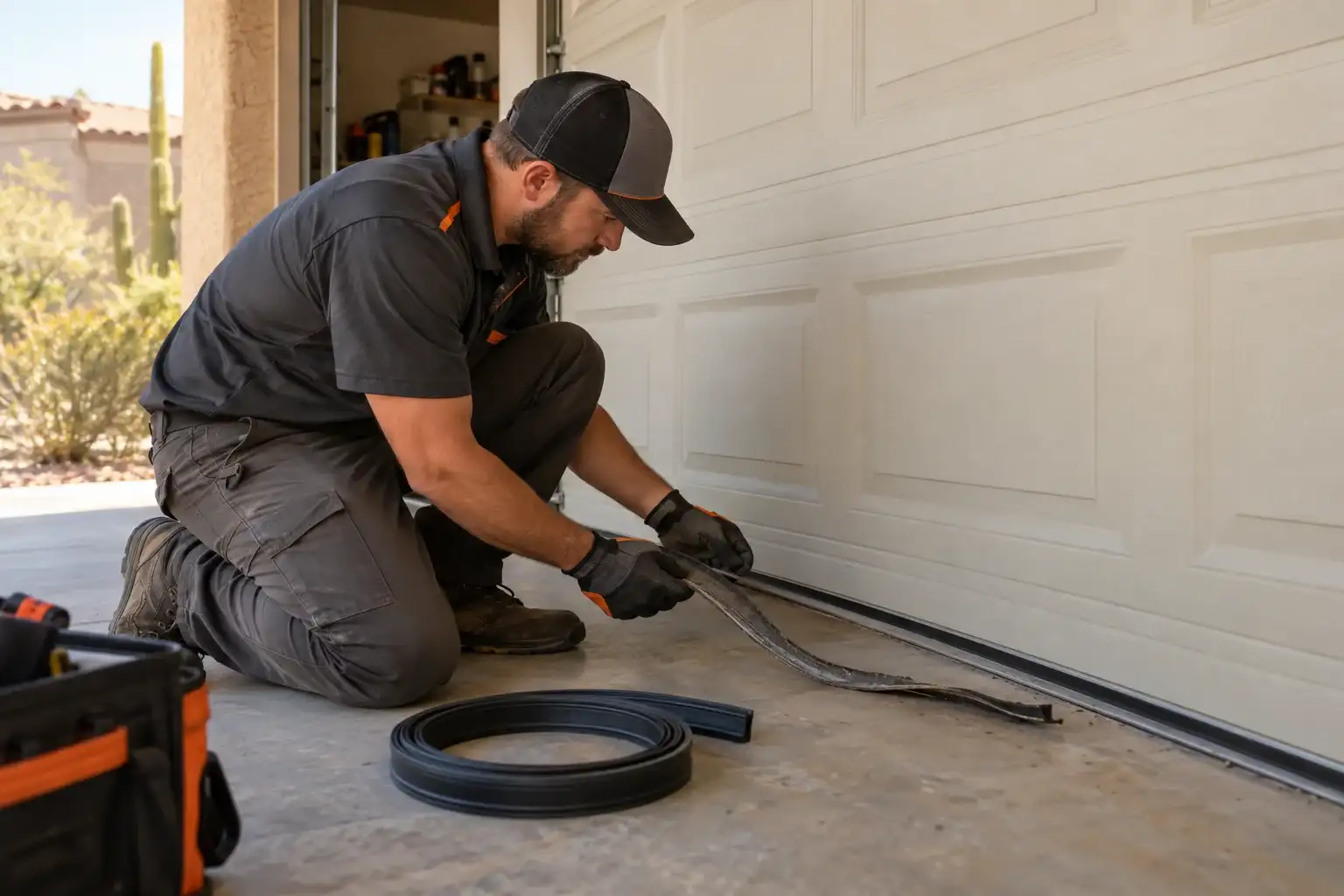
The finish question is the Scottsdale twist. A replacement panel arrives in factory color, and a door that has faced the afternoon sun for a few seasons is not factory color. The repair can be mechanically perfect and still show the patch, which is why the repaint gets priced at the same time as the panel.
Costs
Insurance and who pays
A bump that happens in the garage is usually a collision conversation, and whether the claim goes through the auto policy or the homeowners policy depends on the circumstances and the paperwork. Monsoon damage is a different conversation again. The insurance claim page walks through how the claim side gets handled, and it is worth reading before you agree to anything out of pocket.
What you do not want is to fix the door first and figure out the claim second. The door in its current state is the evidence, and the photos get taken before the tension comes off.
How it works
What to do right now, in order
Stop touching the button. Look at the cables. Look at the bottom panel. Take photos of both. Call before anyone else puts a hand on the door, because the first hour decides whether this is a panel or a door, and nobody wants to pay for the wrong one.
Call (747) 243-2089 and tell us what your door is showing. We go over it with you before anyone quotes you a number. A derailed door is a known problem with a known fix, and the fix starts with seeing it clearly.
See repair vs replacement for the bigger call, the repair cost page for the money, and the garage door guide for the rest. Back to the home page.