Guide · Scottsdale, Arizona
Scottsdale Garage Door Guide: what breaks, what it costs
A sectional door is a stack of panels hung on 2 cables and a torsion bar, and nearly everything that goes wrong starts at one of 4 points: the springs that carry the weight, the opener that pushes, the cables and track that steer the door, and the panels that take the hits. Know which of the 4 is talking and you can tell a repair from a replacement before anyone quotes you. In Scottsdale, heat and dust add their own damage on top of ordinary wear. The parts are not complicated. The order they fail in is what trips people up. Tell us what the door is doing and someone from our team calls you back.
Good to know
How a door system carries its own weight
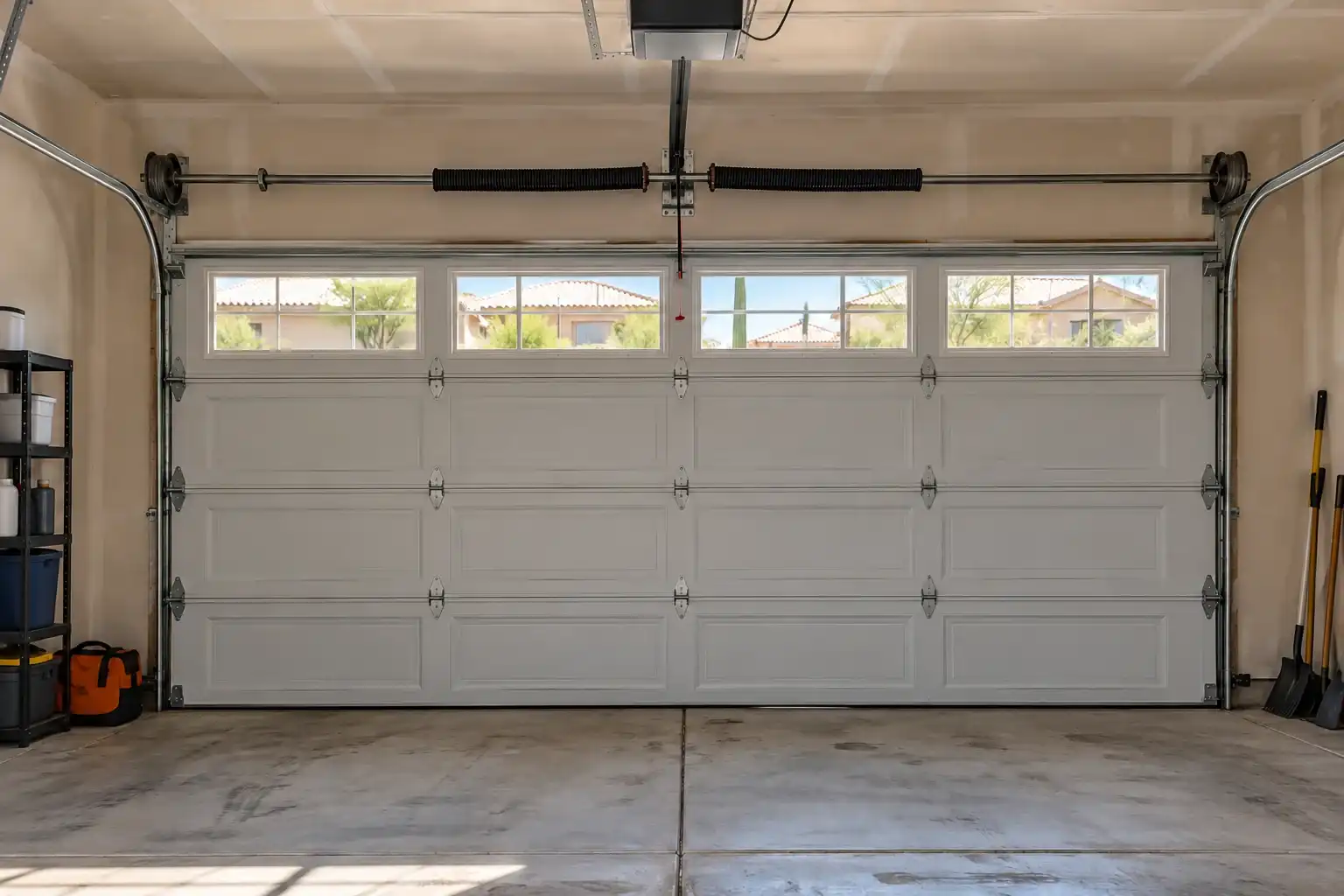
A sectional door hangs from 2 cables, one per side, and those cables wind onto drums on a steel torsion bar above the door head. The springs on that bar carry most of the weight. The opener does the rest: a trolley on a rail pushes the top section up and pulls it back down.
That split explains most failures. The spring is loaded every time the door moves, so it is the part that fatigues. The cables sit under tension the whole time, so a spring that lets go shock loads them in the same second. The opener is a motor with a gear case, a light and a logic board, and it is asked to move a door it could not lift alone.
Read the door as 4 systems: springs, opener, cables and track, panels and hinges. Almost every symptom belongs to one of them, and the first job is deciding which.
Signs
What fails first, and why it is usually the spring
Springs are the most common repair (HomeGuide, Oct 2026). A torsion spring is rated for 10,000 to 20,000 cycles, which works out to about 7 to 14 years in a typical home (HomeGuide, Oct 2026). A cycle is one open plus one close. Nothing about a spring is visible from the driveway and nothing about it gets checked at an oil change. It works until the coil opens.
Cables can be next, often because a spring broke and shock loaded them. Then the opener, which is the part many people blame first.
That order matters. An opener on a door with a broken spring is treating the symptom, and the spring will still be broken when the new motor arrives.
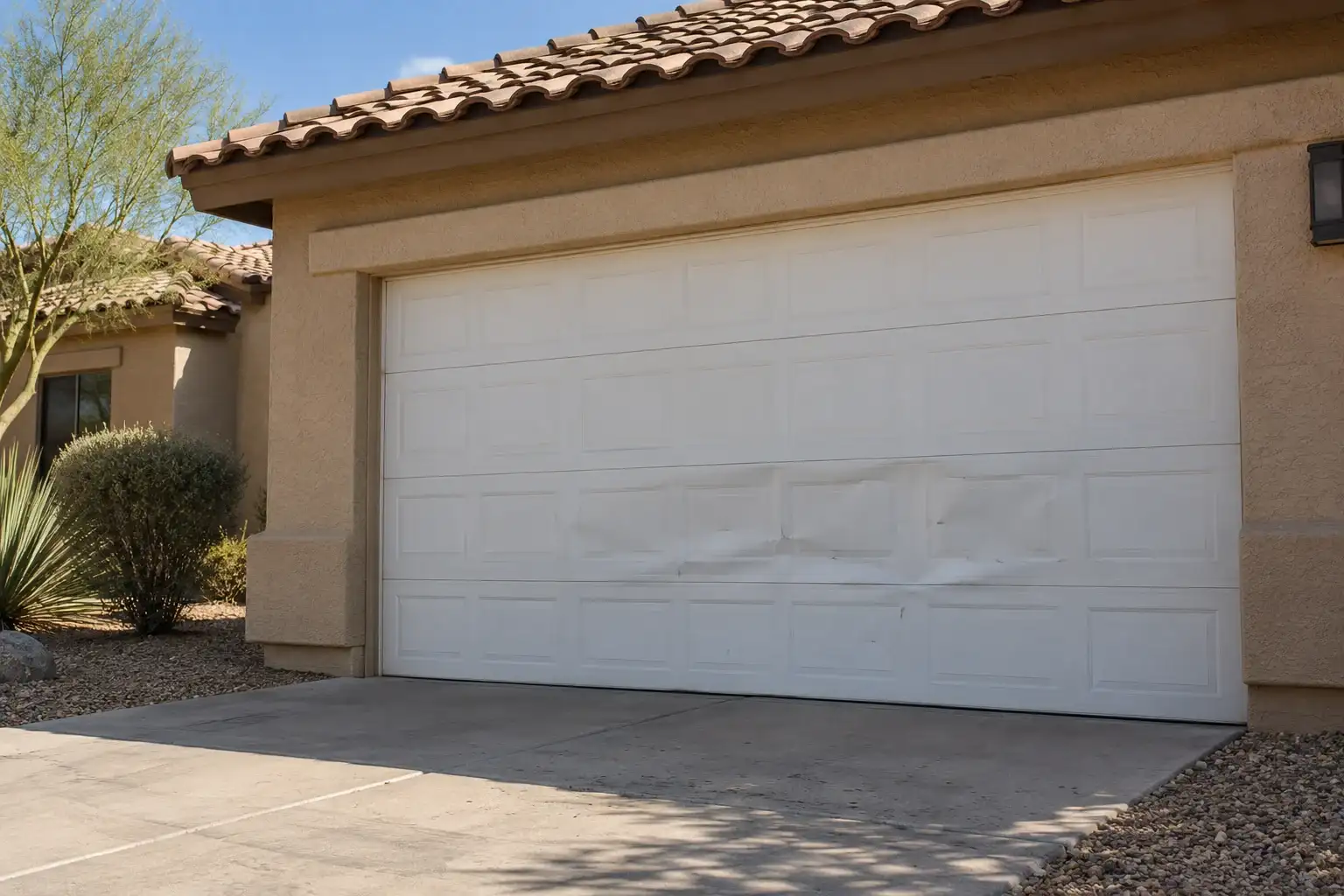
The exception is a door that has been hit: a car, a bike, a ladder. Then the panel and the track are the fault and the spring is fine.
Springs
Springs: torsion, extension and high cycle
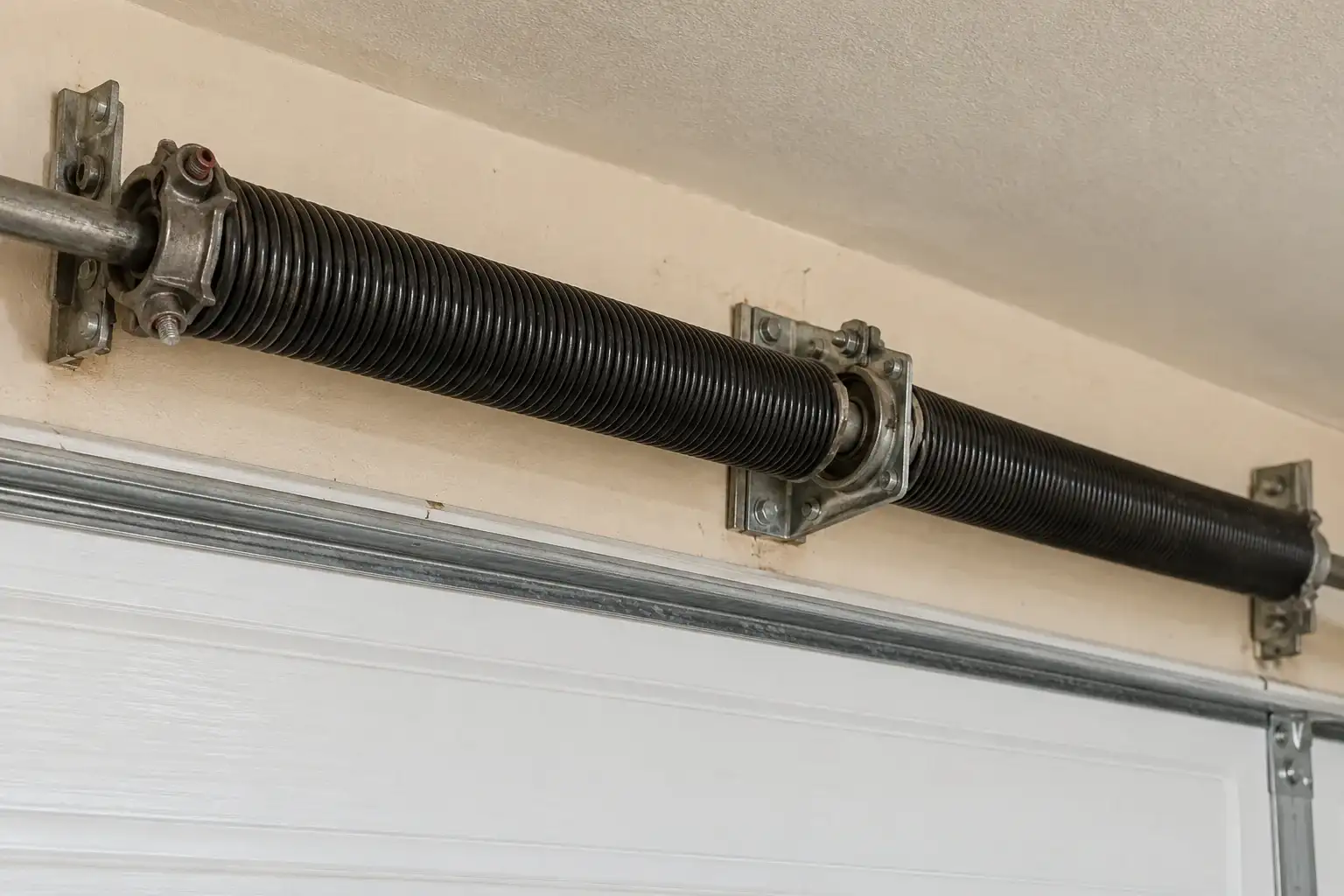
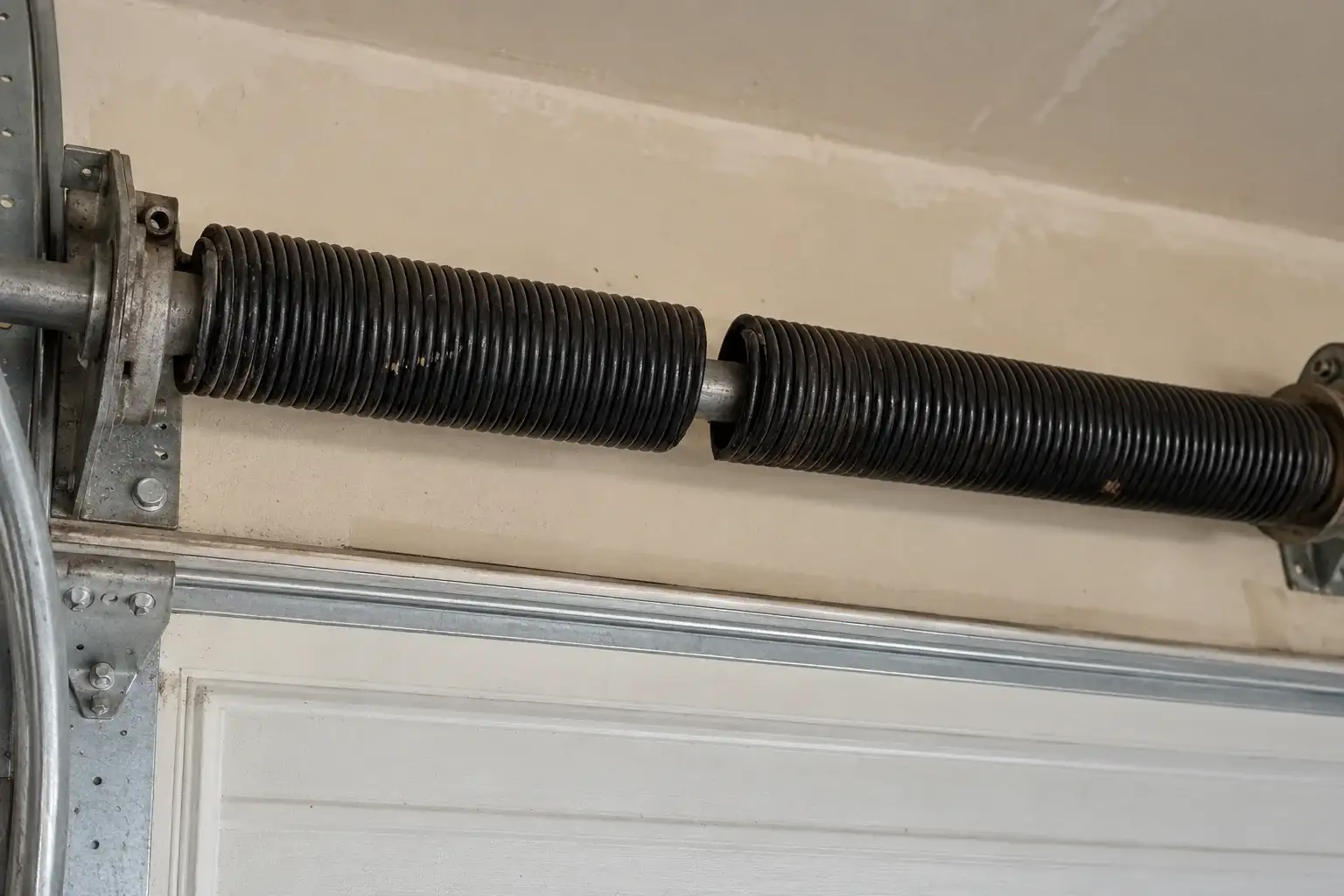
Torsion. A steel bar above the door head with a spring at each end, or one wound in the middle. It twists as the door closes and gives the energy back as the door opens. This is a common setup on a 2-car door. When it breaks there is a loud bang, and the door will not lift by hand.
Extension. A spring that runs alongside the horizontal tracks on older and lighter doors. It stretches instead of twisting, usually 2 per door, and it needs a safety cable through the middle so a broken spring cannot whip across the garage.
High cycle. A torsion spring wound for more open and close cycles. Worth naming for a door that runs several times a day. A house with 2 drivers, a dog and a delivery habit is not the same duty as a door that opens twice. When a coil opens, the call is spring work, and the door stays shut until it is done.
Springs
Cycles, heat and the end of a spring
Torsion springs run 10,000 to 20,000 cycles, about 7 to 14 years in a typical home. Extension springs run 5,000 to 15,000 cycles, about 4 to 10 years (HomeGuide, Oct 2026). A door that runs 4 times a day puts about 1,460 cycles on its springs in a year, so the count arrives long before the door looks old.
Cycles wear a spring out, not heat. Heat can add stress to a spring that is already near the end of its count and can dry out grease points.
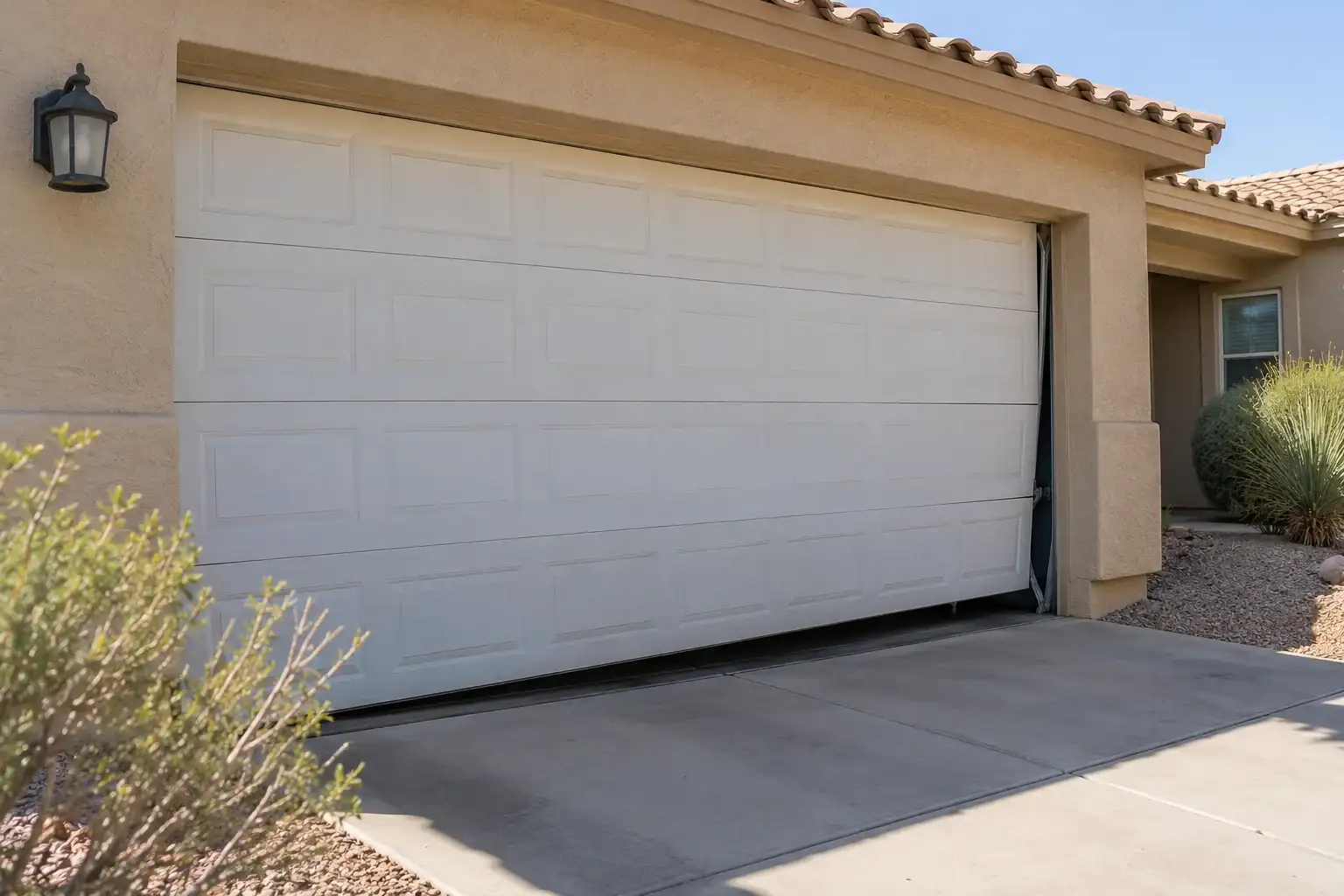
The signs worth acting on: the door is heavy to lift by hand, it opens a few inches and stops, one side sags, a gap opens between the top panel and the header, a cable has gone slack, or there is a visible gap in the coil.
A wound spring holds enough energy to break an arm. That is why the trade uses winding bars, and why a snapped spring is not a hardware store job.
Openers
Openers: chain, belt, screw and jackshaft
Chain drive. The common older unit. Noisy, strong, and the chain stretches while the trolley wears.
Belt drive. Quieter, common on newer homes and on garages under bedrooms.
Screw drive. Fewer moving parts, a single screw rail, common on heavier doors.
Jackshaft. A wall mount that turns the torsion bar instead of pulling a rail. It is the fit for high lift and cathedral ceilings where a rail will not go.
Smart or Wi-Fi. Phone control and a hub. When the hub drops or the app logs out, the wall button still works, and that tells you where the fault sits.
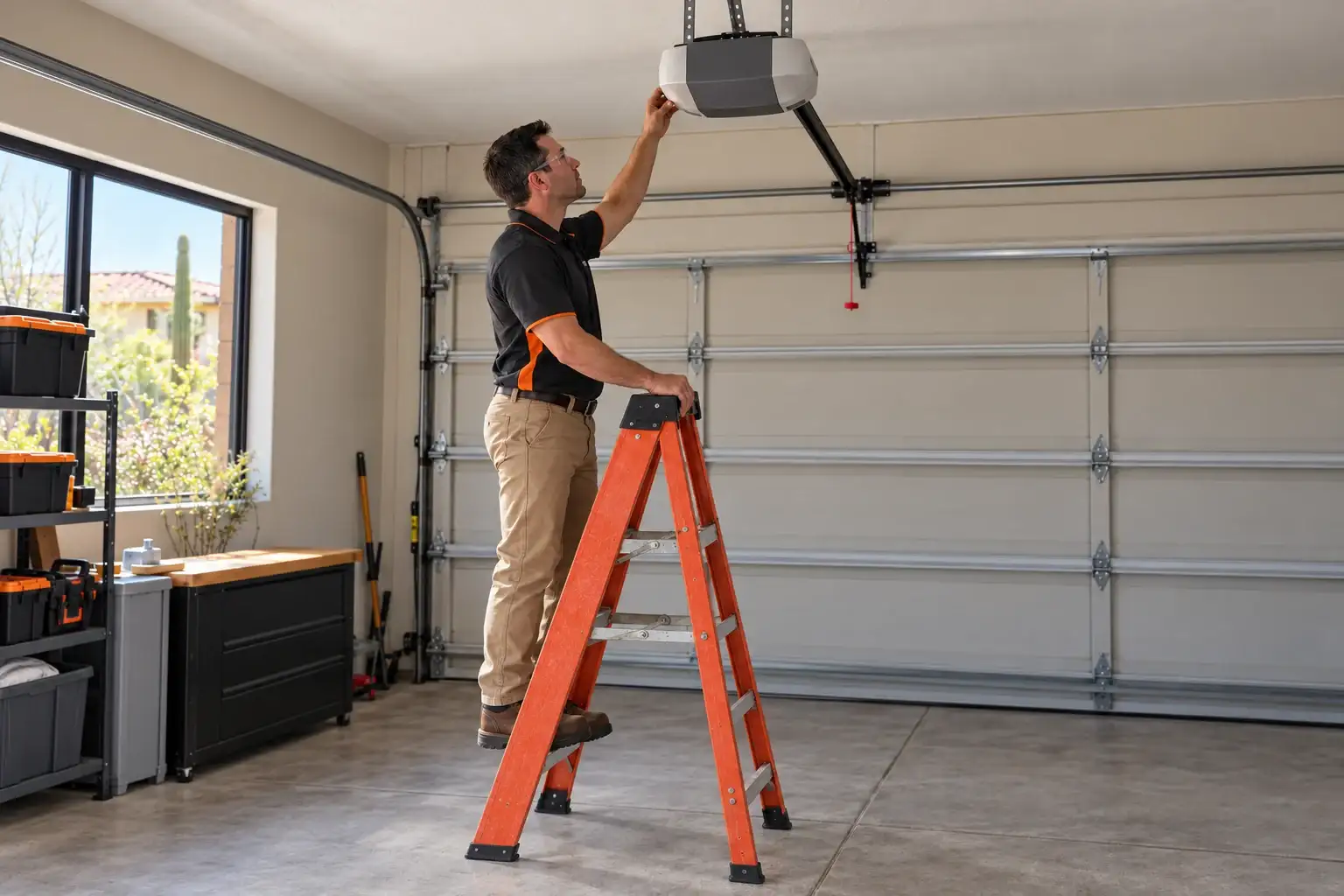
The sign that matters most is a motor that hums with nothing moving. That is a carriage off the rail or a gear case at the end of its life, and it is rarely the door. A unit that has stopped responding is opener work, whether the fix is a carriage, a sensor or the board.
Openers
Sensors, remotes and the safety reverse
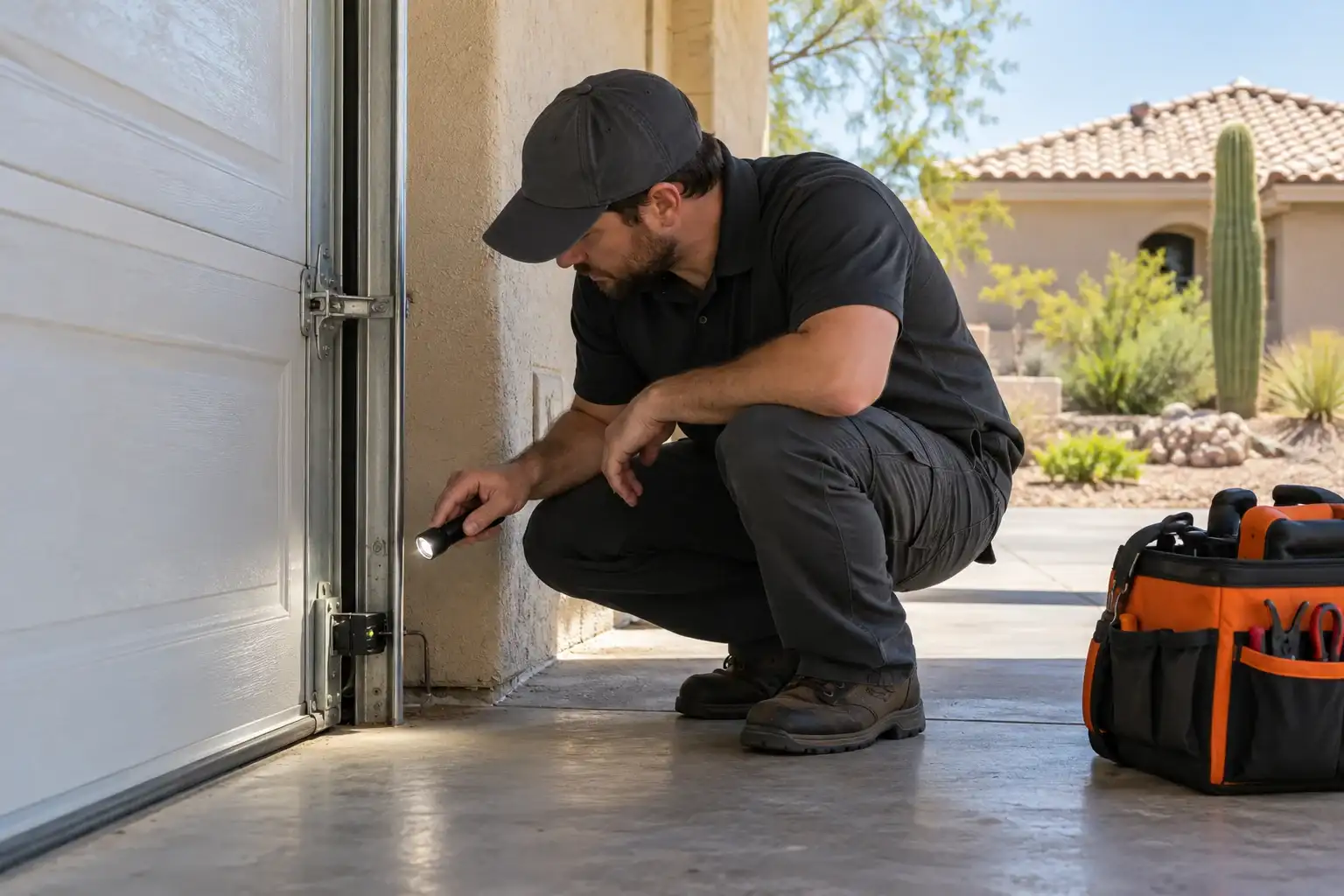
The sensor pair sits at the bottom of the tracks and shoots a beam across the opening. Break the beam and the door reverses. Dust on a lens, low sun on the receiver, or a track knocked out of line does the same thing, which is why a door that will not close is so often a sensor and not a spring.
Then split the controls. Wall button works and the remotes do not: a remote, a battery or the logic board, not the door. Remotes work only up close: a weak battery or a tired aerial.
A door that reverses at the same spot as it comes down is usually the travel limit or a roller binding, not the sensor.
The safety reverse is not a convenience feature. If the door does not reverse on an object left in the opening, stop running it until it does.
Tracks and cables
Cables, tracks, rollers and hinges
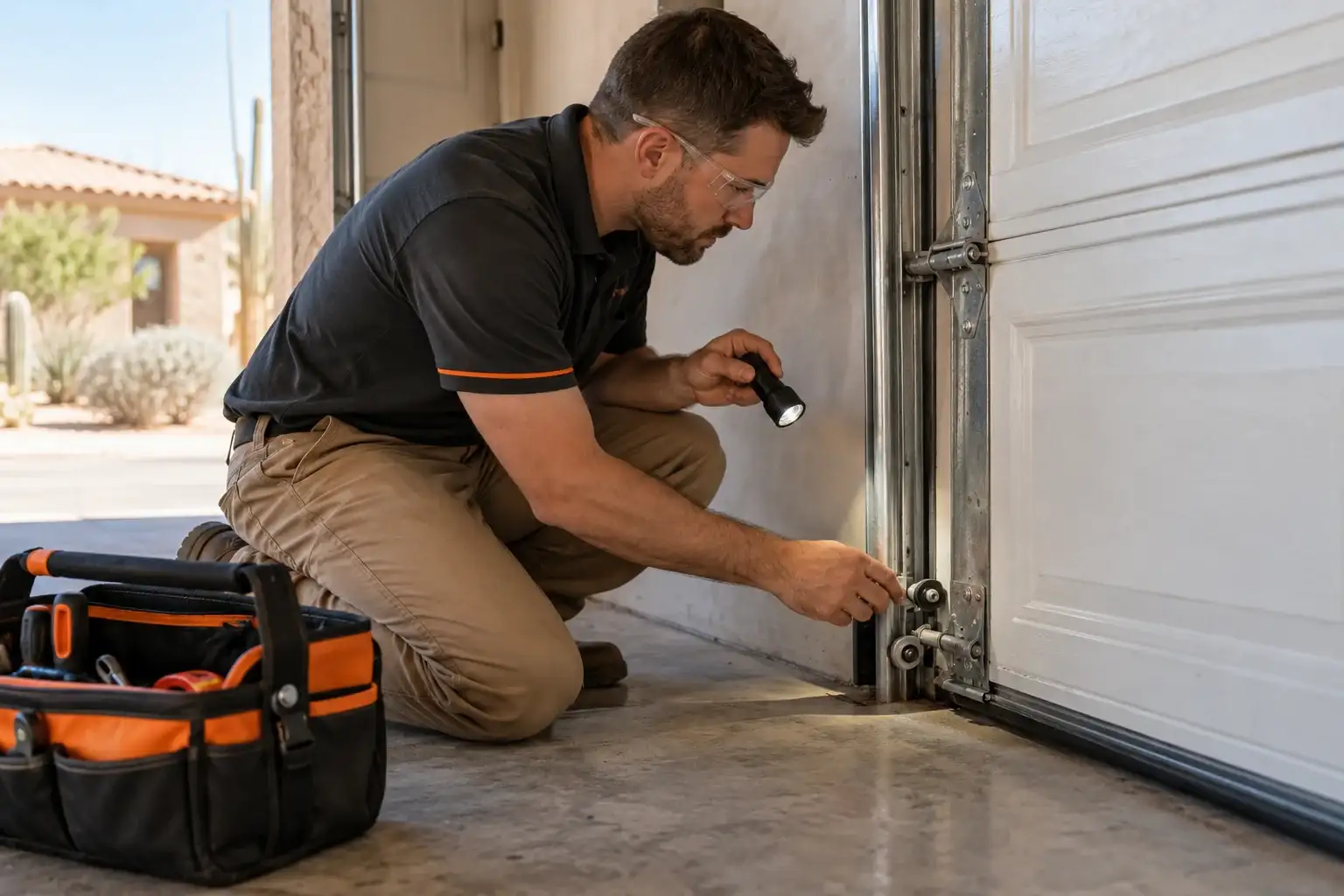
Cable. Galvanized or stainless, one per side on a torsion door. A snapped cable drops one corner and wedges the door in the track. It is not a ladder and gloves job: the cable carries the spring's load.
Track. A standard 12 inch radius curve, a high lift, or a low headroom layout. A bent track shows as a door that binds at one height and runs clean everywhere else.
Roller. Plastic, nylon or steel, 2 inch or 3 inch. A worn roller is noisy and lets the door slop sideways.
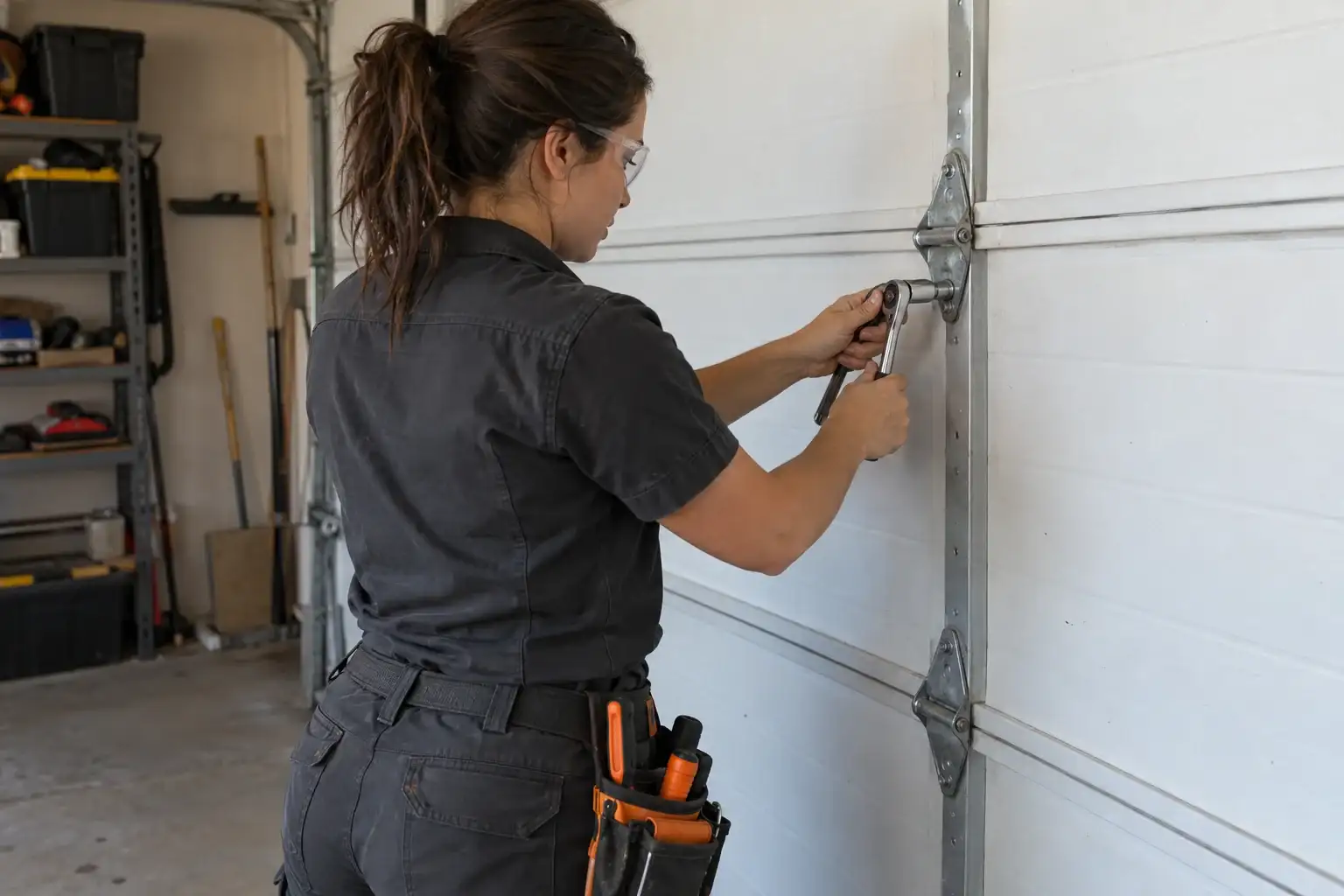
Hinge. Numbered 1 to 4 up the sides of a sectional door. A cracked hinge lets a panel step out of line, and then that panel carries load it was never meant to carry.
Most of these parts are cheap. The damage they do when they are left is not. A cable on the garage floor is off track work, and the door should not run again until someone has seen it.
Panels and doors
Panels: what can be matched and what cannot
Sectional steel. The standard door. A panel can be matched and swapped if the model is still made.
Wood and wood-look. Matching stain and a section in the same profile, which is often a custom order.
Aluminum full-view glass. Common on modern north Scottsdale homes. The panels are frames, so a bent frame or a cracked pane is the repair, not a whole door.
Carriage style. Decorative hardware on a steel back. Hardware and panels are separate parts, so a hardware repair stays cheap.
A panel stops being matchable when the profile is discontinued, the end stile is damaged, the section is bent, or 2 or more panels are damaged on an older door.
A dent that catches the light is cosmetic until it is not. A crack at a hinge point is structural from the first day. A panel that has to be matched is panel and door work, and the model number decides how that goes.
Costs
What repairs cost in Scottsdale
Published national ranges, read October 24, 2026. One source per row, and no averaged number.
| Job | Range | Source |
|---|---|---|
| Garage door repair, average | $150 to $350 | HomeGuide, Oct 2026 |
| Repair labor, per job | $150 to $450 | Angi, 2026 data |
| Service call fee | $50 to $75 | Angi, 2026 data |
| Torsion springs, both | $150 to $350 | HomeGuide, Oct 2026 |
| Opener repair | $100 to $200 | HomeGuide, Oct 2026 |
| Cable repair | $150 to $350 | HomeGuide, Oct 2026 |
| Panel replacement, per panel | $300 to $900 | HomeGuide, Oct 2026 |
| Annual tune up and inspection | $100 to $250 | HomeGuide, Oct 2026 |
A $250 national average sits inside that spread (Fixr, page updated January 2025). What moves a job up: door size, spring type, opener type, whether a panel is still made, gated access, and after hours work. The full breakdown is on what garage door repair costs in Scottsdale.
Costs
When a door is worth replacing instead of repairing
Repair the part when the part is the fault and the panels are sound. Replace the door when the structure is the problem.
That means a discontinued profile, a damaged end stile, a bent section, or 2 or more damaged panels on an older door. At $300 to $900 a panel (HomeGuide, Oct 2026), 2 or more panels is where the arithmetic turns.
The housing stock decides part of this. Scottsdale runs from 1950s ranch houses near Old Town to 1990s and 2000s builds in the north, so a profile that is still made 2 streets over may be gone on your block.
2 more signals. A door that needs frequent repairs may be near the end of its service life, and HomeGuide notes replacement can cost less than repeated repairs. A door that no longer sits square in the opening has a problem a new spring will not fix.
Arizona heat
Arizona heat, dust and the monsoon window
Phoenix has run past 110 F on many days in recent summers, and a garage interior can run hotter than the outside air. Heat can add stress to a spring that is already near the end of its cycle count, and it can dry out the grease in rollers, hinges and the opener gear case. A door that screams in July has usually been wearing for a while.
Monsoon season runs June 15 to September 30, the National Weather Service window. Outflow winds often arrive before the rain, and the dust they carry can get into tracks, sensors and the opener housing. A door that will not close after a storm is usually a sensor or a track full of debris, not a failed spring.
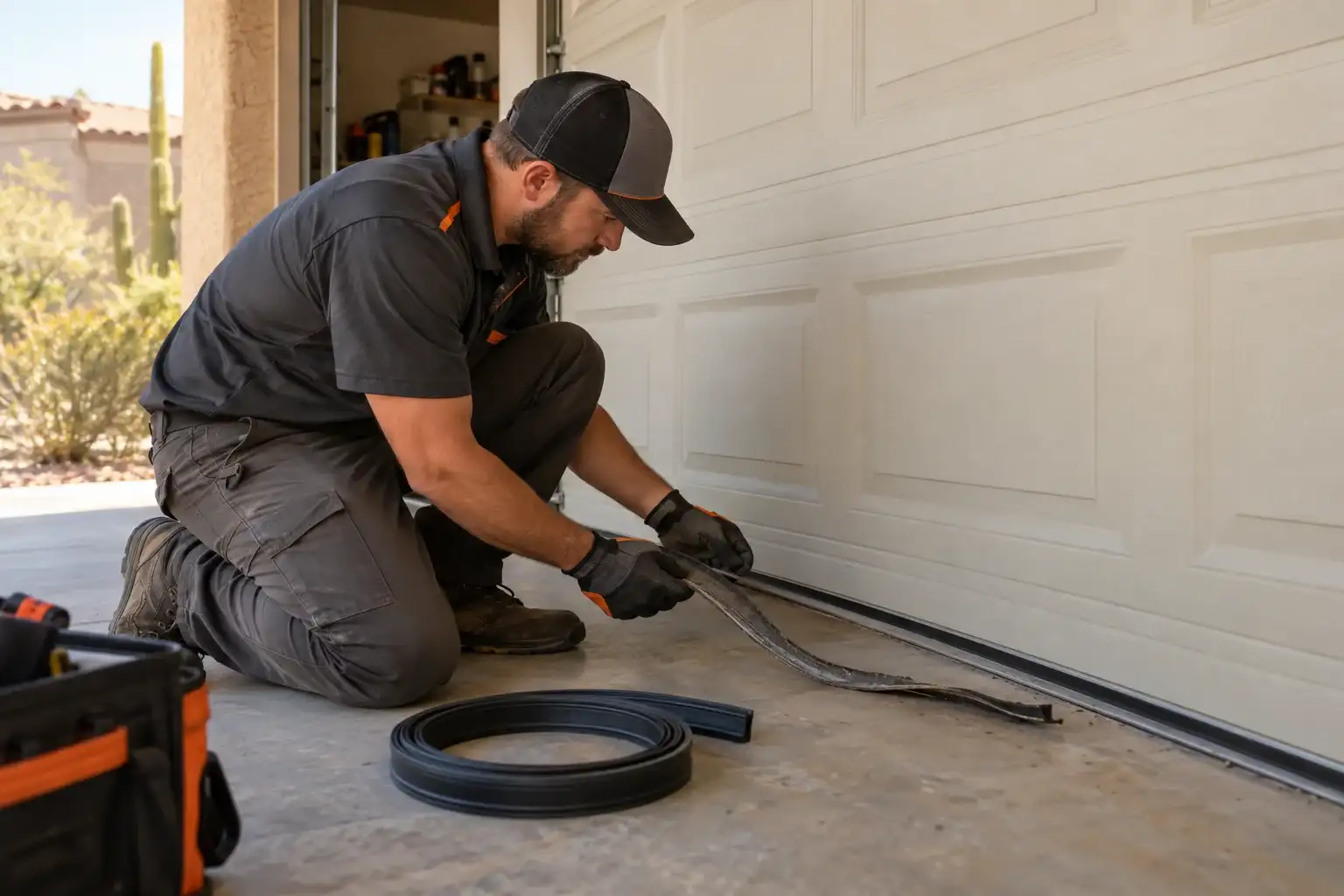
Hose the tracks out after a storm. Wipe the lenses. Look at the bottom seal.
Rules
Renting, HOA review and who authorizes the work
If you rent, the repair is usually the owner's decision. A tenant who orders work can end up holding the bill, so report the symptom with a photo and ask who authorizes it.
If you own inside a community with an architectural review, a door replacement usually goes through that review before the door goes in. A full-view glass door or a color change is the usual sticking point. A repair that keeps the existing panels rarely raises the question at all.
Ask the board what the submission needs before the door is ordered. A custom panel is a long lead already, and a review on top of it makes the wait worse.
None of that is a reason to keep a door that will not close.
Costs
Insurance: the perils that pay and the wear that never does
A homeowners policy covers the perils listed in it and applies the exclusions it lists, so the policy wording decides (Allstate, read October 24, 2026). Allstate names fire or lightning, windstorms and hail, explosion, vandalism, damage from a car or other vehicle, theft and falling objects among the common ones. An attached garage is part of the house, and most policies also cover a detached garage as another structure (Triple-I).
So: wind, hail, a fallen tree limb, a car into the door. Usually a claim, subject to the deductible.
Wear and tear, age, rust, a spring that simply snapped, mechanical breakdown. Usually excluded. That surprises many people at the worst moment.
The opener is a motor and a logic board, and mechanical breakdown is usually excluded. It is usually a claim only when a covered peril damaged it, such as a fire, or a lightning surge on a policy that covers surges.
A claim usually needs photos, a date, a cause and often 2 estimates. The insurance page takes the perils one at a time.
Upkeep
A maintenance calendar for a Valley garage
Every month. Listen to the door at the same point of travel. Test the reverse with an object in the opening. Look at both sensor lenses.
Before June. Clear the tracks, check the balance with the opener released and the door closed, and look along the coil for a gap without touching it. A spring near the end of its count can give little other warning.
After a monsoon. Sweep the tracks, wipe the lenses, and check the bottom seal for grit pressed into the rubber.
Once a year. A tune up and inspection runs $100 to $250 (HomeGuide, Oct 2026). It is a small job, and it is easy to skip.
A part that has to be ordered can be the slowest step in a repair. A door checked in May is less likely to wait on a part in August.
10 questions
What people ask us
Still have a question? Call (747) 243-2089 and say what the door is doing.
How long should a garage door spring last?
A torsion spring is rated for 10,000 to 20,000 cycles, which works out to about 7 to 14 years in a typical home (HomeGuide, Oct 2026). Extension springs are shorter lived at 5,000 to 15,000 cycles, about 4 to 10 years. A cycle is one open plus one close, so a busy household gets there faster.
Can I replace one spring and leave the other?
2 springs wound at the same time carry the same cycles, so the second one is usually close behind the first. Replacing one leaves a door that is half worn and a second call soon after. The published ranges are for both springs, which is how the job is normally priced.
Why does my door reverse before it closes?
Something is breaking the sensor beam or the travel limit is set wrong. Dust on a lens, low sun in the afternoon, a track knocked out of line, or an object in the opening will all do it. Clean the 2 lenses and look along the tracks before you call anyone.
Is it safe to use a door with a broken spring?
No. A torsion door with no spring is heavy, and the opener is pulling a load it was never built to carry. Lifting it by hand puts the weight on your back and on the cables, and the door can come down hard. Leave it closed and keep people and pets clear.
What does a repair cost in Scottsdale?
Published national ranges put a garage door repair at $150 to $350, with torsion springs for both sides at $150 to $350 and a service call at $50 to $75 (HomeGuide and Angi, read October 24, 2026). Door size, spring type, opener type and panel availability move the number inside those ranges.
One dented panel, or a new door?
One panel, if the model is still made and the frame is straight. Steel panels can be matched and swapped. A discontinued profile, a damaged end stile or 2 damaged panels on an older door is where a new door becomes the cheaper answer, at $300 to $900 a panel (HomeGuide, Oct 2026).
What is a high cycle spring worth?
A high cycle spring is a torsion spring wound for more open and close cycles. It is worth naming when the door runs several times a day, because the standard count arrives years sooner. The cycle count matters as much as the price, because 2 springs at the same price can be different parts.
The opener hums and nothing moves. What now?
Pull the manual release cord and try the door by hand. If it lifts with 2 fingers, the door is balanced and the fault is in the opener, usually the carriage off the rail or a gear case at the end. If it is heavy, stop and treat it as a spring problem.
Does insurance cover a snapped spring?
Usually not. A standard policy does not pay for routine wear and tear (Triple-I), and age, rust, a spring that simply snapped and mechanical breakdown are usually excluded in policy wording. Wind, hail, a fallen limb or a car into the door is the version that usually is, subject to the deductible. The cause decides it, not the damage.
How do I check the door is balanced?
Release the opener with the door closed, lift the door halfway by hand and let go. A balanced door stays where you put it. One that drops or runs up on its own has a spring problem. Do this only if the springs are intact and the door does not feel heavy.
Get a call back about your garage door. Tell us what the door is doing, where you are, and the best number for a call back. The line is answered day or night.