Compare
Torsion springs vs extension springs in Scottsdale, AZ
Torsion springs mount on a shaft above the door and lift by unwinding. Extension springs stretch along the side tracks and lift by pulling. For a two car Scottsdale door, torsion is the safer, longer lived setup, and nearly every modern door is built around it.
Good to know
The short answer
Torsion springs live on the bar above the opening, store their energy as torque, and fail in a way that stays contained. Extension springs stretch beside the track and, without a safety cable, can throw parts across the garage when they snap. Torsion costs more up front and is worth it on the heavy wood doors and two car steel doors that dominate Scottsdale. Extension is the cheaper system you find on older and lighter doors, and it can be fine, if it is looked after.
The right choice depends on the door's weight, the space above the opening, and what the current track was built for.
Springs
Torsion springs: what they actually are
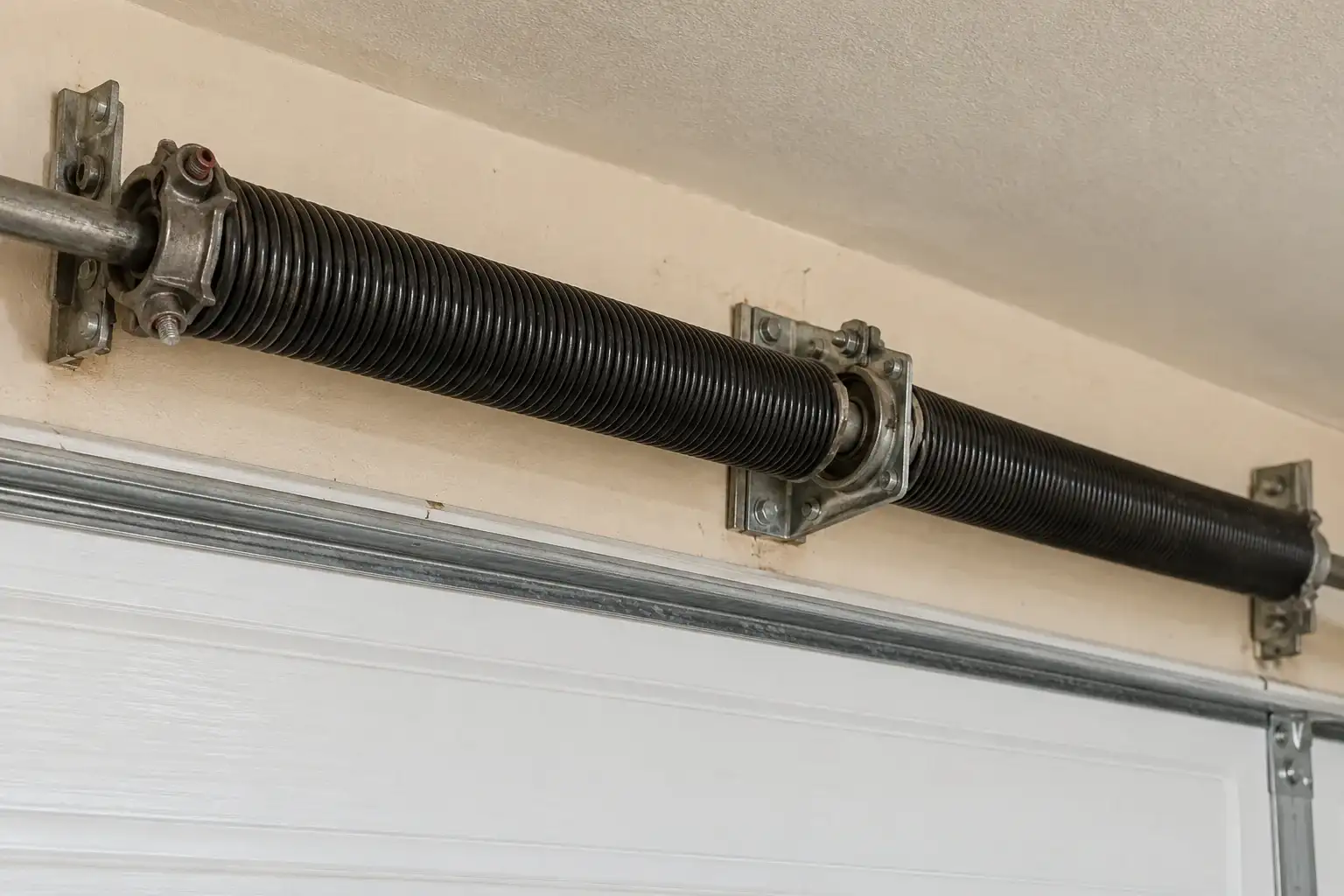
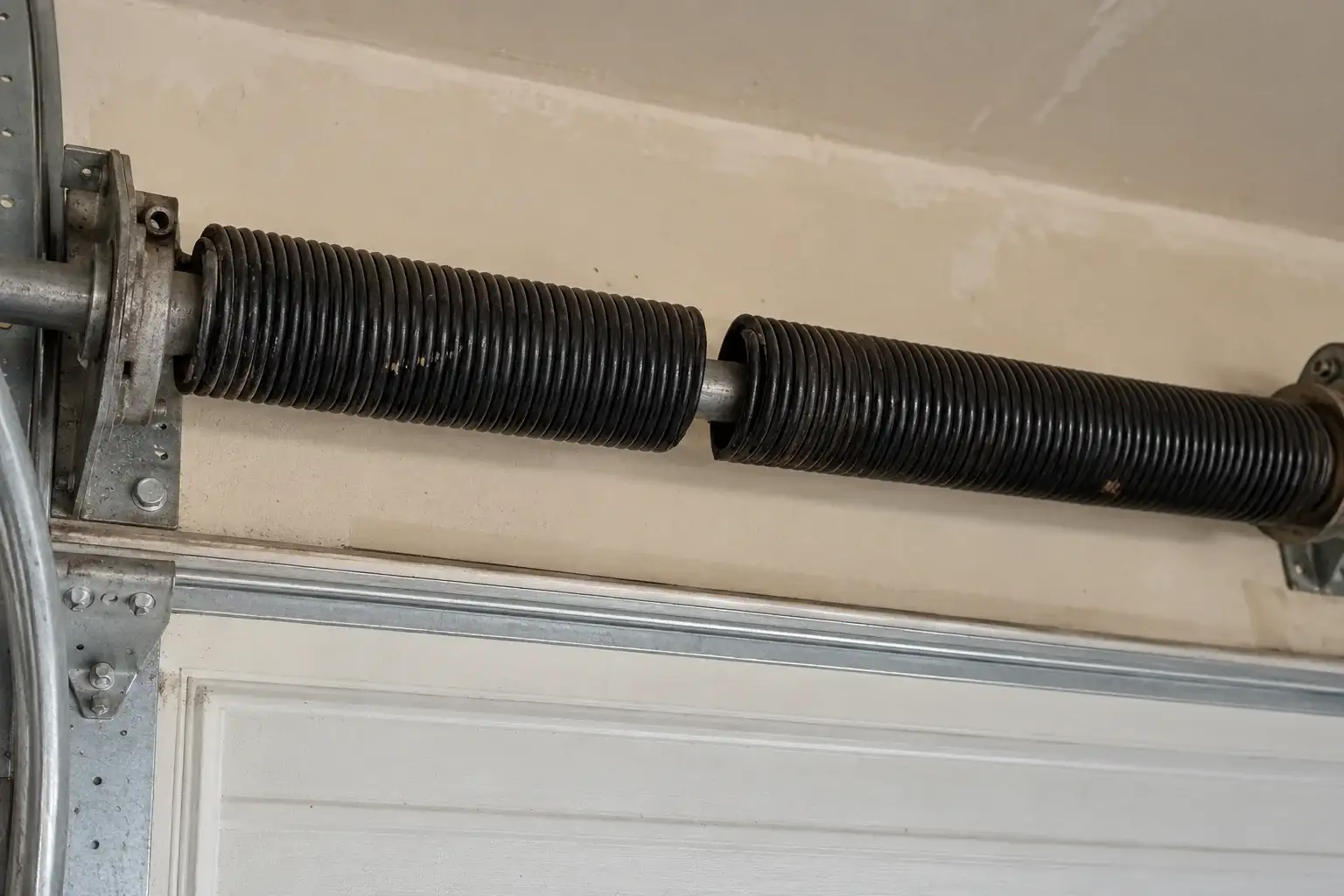
A torsion spring is a coil of spring wire wound onto a shaft that runs above the door, usually just behind the header. When the door closes, the spring winds up and stores torque. When the door opens, the spring unwinds and pays that torque back through drums and cables, doing most of the lifting while the opener does the rest. On a standard two car door there are two of them, one wound left, one right, sharing the load.
The winding cone at the end of each spring is where failures usually start. The wire flexes most at that point on every single cycle, and that is the part that fatigues first. The rest of the spring can look brand new.
Springs
Extension springs: what they actually are
Extension springs run along the horizontal track on each side of the door, anchored at the rear of the track and hooked to the door through cables and pulleys. They store energy by stretching when the door closes and pull the door up when it opens. The name is literal: the spring extends, and the stretched coil is the power.
A safety cable is supposed to run through the middle of each spring and anchor at both ends. That cable does nothing while the spring is healthy. If the spring snaps, the cable is what keeps a flying coil of steel from crossing the garage at head height. Old doors often do not have them.
Signs
Where torsion springs fail here
Cycle fatigue. A torsion spring is rated in cycles, not years, and a Scottsdale door burns through them faster than the national average because the door runs for deliveries and for the heat. Each lift and each close is a cycle, and on a street where packages arrive daily and the garage gets aired out every evening, the count climbs.
The break almost always happens at the winding cone, and it happens with the door down. The result is a door that suddenly weighs what it actually weighs, a few hundred pounds of steel and glass. The opener was never meant to move that alone, which is how a broken spring turns into a broken opener. That sequence, spring first, opener second, is behind more Scottsdale repair calls than any other. The spring repair vs replacement page covers what happens next.
Signs
Where extension springs fail here
They fail in the open, and that is the difference. When an extension spring lets go, the stored energy goes somewhere, and without a safety cable that somewhere is the garage. An older Scottsdale home with original extension springs and no containment cables is the exact setup where a snap turns into damage.
They also age visibly. The coils sit in the open air near the track, they pick up dust, and the dry heat bakes whatever lubrication they had. A stretched, rust speckled pair is a warning sign, not a noise complaint. And extension systems do not share the load as evenly as a torsion pair, so one side usually wears out first and the door starts closing crooked. The stretch happens on every cycle too, so an extension pair on a busy Scottsdale door ages the same way a torsion pair does, just with more rust showing on the outside.
Costs
What it costs and what drives the number
A spring package, replaced in pairs, moves in price with the weight of the door and the cycle rating of the spring. Wood doors need heavier springs, so they cost a bit more. Converting an extension system to torsion costs more than a straight replacement because the shaft, drums, cables, and mounting all get added, but it is a one time change, not a recurring one.
If a quote lands far above that range, something else is being priced, and the eight hundred dollar spring quote post walks through how to read it. The number on a spring job should be driven by door weight and spring spec, not by how urgent the situation feels.
Good to know
What good work looks like in Scottsdale
- Springs get replaced in pairs. The two springs share every cycle, and a new one next to a worn one leaves the door balanced wrong from day one.
- The door gets weighed before the spring is sized. A wood door weighs more than its steel twin, and the spring has to match the actual door, not the brochure weight.
- Cables and drums get checked on the same visit. A new spring on frayed cables is a job that will not last the summer.
- The spring spec, wire size, inside diameter, and length, goes in writing so one quote can be compared against another.
6 questions
Torsion springs vs extension springs: your questions
Still have a question? Call (747) 243-2089 and say what the door is doing.
Which spring system is safer?
Torsion. The energy is contained on the shaft above the door. Extension springs without safety cables can throw parts when they snap, which is why the cable through the middle matters.
Why do Scottsdale springs break more often than expected?
Cycles, not years. A Scottsdale garage cycles more than the national average because the door runs for deliveries and for the heat, so a spring that is rated for a national average lifetime gets there faster here.
Can I convert extension springs to torsion?
Usually, if there is headroom above the door for the shaft. The conversion adds the shaft, drums, and cables, and after that the door behaves like a modern door. It is common when an old door gets rebuilt rather than replaced.
Do I replace one spring or both?
Both. They wear together. A new spring beside an old one means one side works harder than the other, and the door goes out of balance.
How do I know a spring is about to break?
You usually do not. The common sign after the fact is a door that refuses to lift or slams down hard. Before that, a door that feels heavy when you run it by hand, or a gap in the spring coil, is worth a look.
What should a pair of springs cost?
The price varies with the door's weight. If a quote lands far above that, ask for the spring spec and the line items before you pay.
Springs are the part of the door that fails on purpose, so the door does not come down on the car. Call (747) 243-2089 and tell us what your door looks like. We go over which spring setup it has, what it should cost, and what the next step is.
Start with the garage door guide for the basics, check the repair cost page for the money side, or see the service areas map if you want to know whether we serve your street. Back to the home page.